


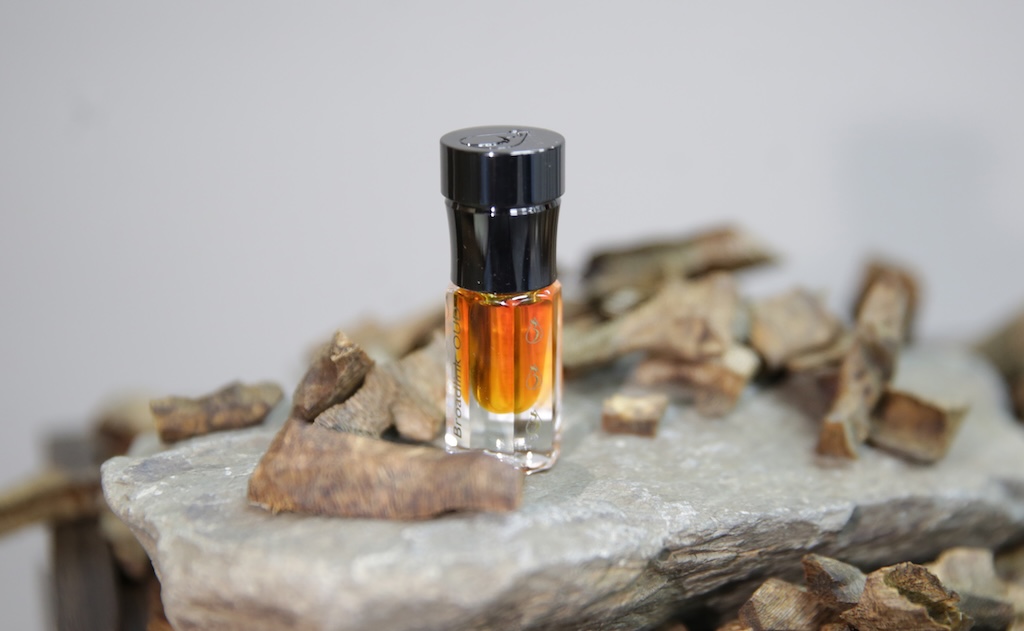
If you've searched for "Oud oil" online, you've probably came across with "Oud oil" and "Oud essential oil".
However, they are not the refer to same thing — from raw materials, extraction methods, and production scale to purity, concentration, and even the final scent profile.
Using the wrong one for your perfume, spiritual practice, or therapeutic needs may lead to disappointment. So before you spend your money, let's break down the difference.
Pure oud oil
Pure oud oil is the real deal. It is the closest you can get to the soul of the Agarwood tree.
| Feature | Specification |
|---|---|
| Raw materials | 100% natural Agarwood (Aquilaria) wood chips — no flowers, no herbs, no fillers |
| Extraction method | Hydr distillation (traditional steam/water distillation, often in copper pots) |
| Yield | Extremely low — approximately 1 ton of raw Agarwood produces only 1 kilogram of pure oil |
| Purity | No chemical additives, no blending, no dilution. What you get is 100% pure Agarwood essence |
| Production scale | Cannot be mass-produced. Each batch is small, artisanal, and time-consuming |
Pure Oud Oil, by definition, is derived from 100% Agarwood. One of the most remarkable characteristics of agarwood's scent is its complex — a dynamic and complex bouquet of aromas that changes and unfolds over time.
Complex and multi-layered — top notes can be fruity, floral, woody, fermented, or even barnyard-like; heart notes are woody and balsamic; base notes are deep, smoky, and sweet
Evolving — the scent changes dramatically over 30–60 minutes on skin
Potent — one drop can fill an entire room
Long-lasting — 8–12+ hours on skin, days on clothing
Oud Essential Oil
Most commercial Oud Essential Oils mean blended oil.
| Feature | Specification |
|---|---|
| Raw materials | Flowers, plants, herbs + a small amount of Agarwood |
| Extraction method | Fine chemical processes (often solvent extraction or modern distillation) |
| Raw material consumption | Flowers and plants are the main consumables; Agarwood is a minor component |
| Additives | Contains fragrance essence (synthetic or natural) for scenting. Overall concentration is low |
| Production scale | Can be mass-produced. Large batches are possible |
Many perfumers will use oud oil as a base, adding other essential oils, like herbal, flowers to create a scented blend.
Adding different essential oils and blending methods give blended essential oils endless possibilities. However, it's important to distinguish between natural ingredients and chemical components.
Here are some popular types of Blended essential oils:
Warm Woody Note --- Blended with rose and sandalwood, the scent is rich, mellow, and slightly sweet, reminiscent of aged wood in an ancient temple. Ideal for relaxation and calming the mind.
Cool Herbal Note --- Blended with frankincense and peppermint, the aroma is airy, clear, and profound, carrying a Zen-like quality. Perfect for meditation.
Floral Fruity & Lively Note --- Blended with sweet orange and ylang ylang, the scent is bright, tangy, and lively yet grounded — widely appealing and great for uplifting the mood.
Core Experience: With agarwood as the base, every fragrance becomes exceptionally stable, long-lasting, and sophisticated.
Is agarwood the same as oud?
"Agarwood" is often used interchangeably with "Oud."
Agarwood is the resinous heartwood that forms in Aquilaria and Gyrinops trees when they become infected with a particular type of mold. Oud, also known as oudh or agarwood oil, is the fragrant resinous substance distilled from agarwood. So, agarwood is the raw material, and oud is the oil extracted from it.